Washington and Beijing Strike Framework Deal on TikTok as U.S. Deadline Looms

WASHINGTON D.C. — In a dramatic turn in one of the most closely watched tech and trade disputes between the United States and China, Treasury Secretary Scott Bessent announced Monday that Washington and Beijing have reached a “framework for a TikTok deal.” The announcement comes just days before a critical deadline that could have resulted in the popular social media platform being banned nationwide.
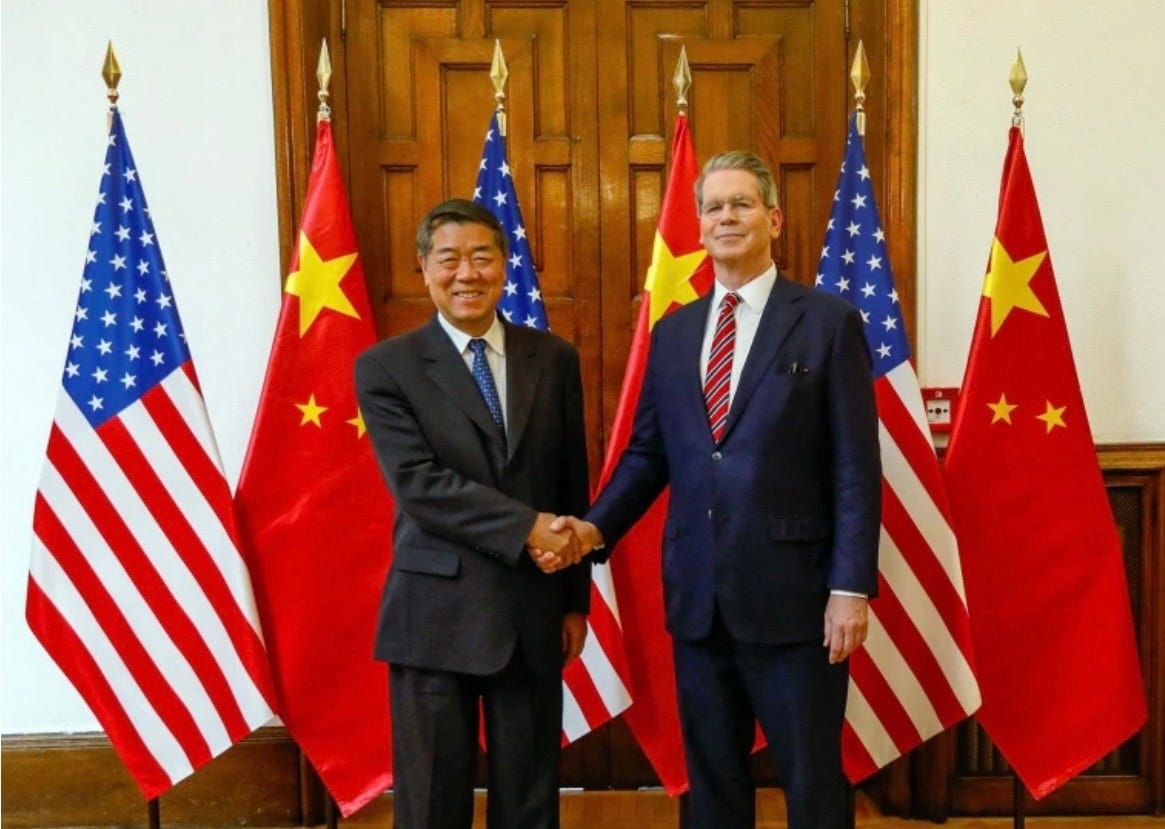
Speaking from Madrid, where he was meeting with Chinese officials for broader trade discussions, Bessent confirmed that the two sides had hammered out key points of an agreement. “We were very focused on TikTok and making sure that it was a deal that is fair for the Chinese and completely respects U.S. national security concerns,” he said. “That’s the deal we reached.”
While details of the arrangement remain sparse, Bessent stressed that commercial terms had already been settled between private parties. He did not specify which firms were involved, leaving open questions about who will ultimately control TikTok’s powerful recommendation algorithm, the core technology that dictates what users see on their screens.
A Fragile Breakthrough in U.S.–China Relations
The announcement was quickly echoed by Chinese Vice Minister of Commerce Li Chenggang, who said the two governments had reached “a basic framework consensus” to resolve TikTok-related issues through cooperative means. According to China’s state-run Xinhua news agency, Li emphasized that the deal would help reduce investment barriers and promote wider economic cooperation at a time of tense relations between the world’s two largest economies.
The talks in Madrid unfolded against a backdrop of escalating disputes, including Beijing’s decision to accuse U.S. chipmaker Nvidia of violating anti-trust laws. That move signaled China’s willingness to counter Washington’s pressure campaigns with regulatory actions of its own.
Still, officials on both sides appeared eager to cast the TikTok deal as a sign of progress. For the United States, the agreement is designed to protect national security while maintaining one of the country’s most popular social media platforms. For Beijing, it represents a chance to demonstrate that Chinese firms can remain active in the American market under fair terms.
Trump Takes Credit for Saving TikTok
President Donald Trump, who had previously moved to ban TikTok during his first term, announced on Truth Social that an agreement had been reached over “a company that young people in our Country very much wanted to save.” Trump added that he would speak directly with Chinese President Xi Jinping later this week.
The White House was quick to emphasize the president’s role in the breakthrough. A spokesperson for Vice President JD Vance, who has been heavily involved in the administration’s TikTok strategy, praised Trump’s “leadership and foresight,” saying his intervention helped secure a deal that “saves TikTok” and allows “hundreds of millions of Americans” to continue using the app safely.
Commerce Secretary Howard Lutnick offered a blunt assessment of the stakes in an interview with CNBC. “The president likes TikTok. You know, he did well communicating with young people through TikTok. So he’s partial to it,” Lutnick said. “But unless it’s owned by Americans, and the algorithm is controlled by Americans, it cannot stay. If the president can get that, he’s going to keep TikTok. If you can’t, it’s going to go dark.”
A Legal and Political Minefield
The framework deal comes at the end of a long and winding legal and political battle over TikTok’s future in the United States. In 2024, Congress passed a bipartisan law requiring TikTok’s Chinese parent company, ByteDance, to sell the platform to a U.S.-based entity or face severe penalties. The Supreme Court upheld the measure, leaving TikTok in limbo as ByteDance searched for a buyer.
The app briefly shut down in the United States just before Trump’s second inauguration, but the president quickly issued an executive order allowing it to continue operations while negotiations proceeded. He has since extended that order multiple times, most recently in June. The current extension is set to expire this week, placing new urgency on the deal announced in Madrid.
Over the past year, several high-profile U.S. firms—including Oracle, Amazon, Blackstone, and Andreessen Horowitz—have expressed interest in acquiring TikTok. Oracle co-founder Larry Ellison, a longtime Trump ally, has been considered one of the leading contenders. Meanwhile, Jeffrey Yass, one of TikTok’s U.S. investors, has lobbied heavily to prevent a shutdown. Yass’s stake in TikTok, once valued at $21 billion, has underscored the enormous financial stakes tied to the platform’s future.
TikTok, Trump, and the Battle for Young Voters
TikTok’s fate has not only been a legal and financial question—it has also become a political one. Trump has spoken openly about the platform’s role in helping him win over younger voters during the 2024 election. “A Republican never wins youth, but I won youth,” Trump said last week during an appearance on Fox & Friends. “I will tell you, TikTok helped me.”
The president also tied his embrace of TikTok to the late conservative activist Charlie Kirk, who was assassinated last Wednesday while speaking at an event in Utah. “Kirk helped me with TikTok, but he helped me with youth,” Trump reflected during the interview, underscoring how the app has become part of his broader political narrative.
For many Republicans, Trump’s shift on TikTok—from trying to ban it to working to save it—illustrates his willingness to adapt to political realities. In this case, it also highlights the enormous cultural clout of a platform with more than 170 million American users.
What Comes Next
Despite the announcement of a framework deal, TikTok’s future remains uncertain. The agreement must be finalized and implemented, and it is unclear whether the terms will satisfy both Congress and the national security establishment in Washington. Lawmakers from both parties have signaled they will be watching closely to ensure that U.S. user data is protected and that Beijing has no influence over the app’s algorithm.
For now, though, the administration is celebrating what it views as a hard-fought success. With the clock ticking on the latest extension, the framework deal offers at least temporary relief for TikTok’s vast American user base—and a political victory for a president eager to prove that he can balance national security with cultural reality.
Whether this fragile compromise will hold may depend on the details still hidden from public view. Until then, TikTok remains at the center of one of the most consequential debates in the U.S.–China relationship and one of the most unlikely political survival stories of Donald Trump’s presidency.